
Acoustic Design in Large Scale Children’s Public Spaces:
The KidZania Case Study
Project Overview
Acoustic panel solutions play a critical role in controlling sound in large-scale children’s entertainment spaces. In environments with high activity levels, multiple sound sources, and large volumes, acoustic panels help improve speech clarity, reduce reverberation, and support overall acoustic comfort. Large-scale children’s entertainment spaces require careful acoustic planning. High occupancy levels, large volumes, and multiple sound sources make sound control more complex. In these environments, speech, interactive activities, background music, and technical systems operate simultaneously.
For this reason, acoustic design plays a critical role in maintaining comfort and clarity.
This case study examines the acoustic improvement process at Akasya Children’s World (KidZania) using Feltouch acoustic solutions. It focuses on the design approach, applied systems, on-site constraints, and achieved acoustic performance.

Figure I- Measurement with omnidirectional speakers and appropriate sound pressure level meters
Design Challenge
The primary challenge involved achieving acoustic comfort in a large, high-energy environment with continuous sound activity. Multiple sound sources directly affected speech intelligibility, spatial clarity, and overall user comfort.
At the same time, the project team introduced acoustic solutions at an advanced design stage. As a result, all interventions had to adapt to existing architectural, interior, and technical conditions. The team aimed to improve acoustic performance without disrupting the design concept or daily operations.
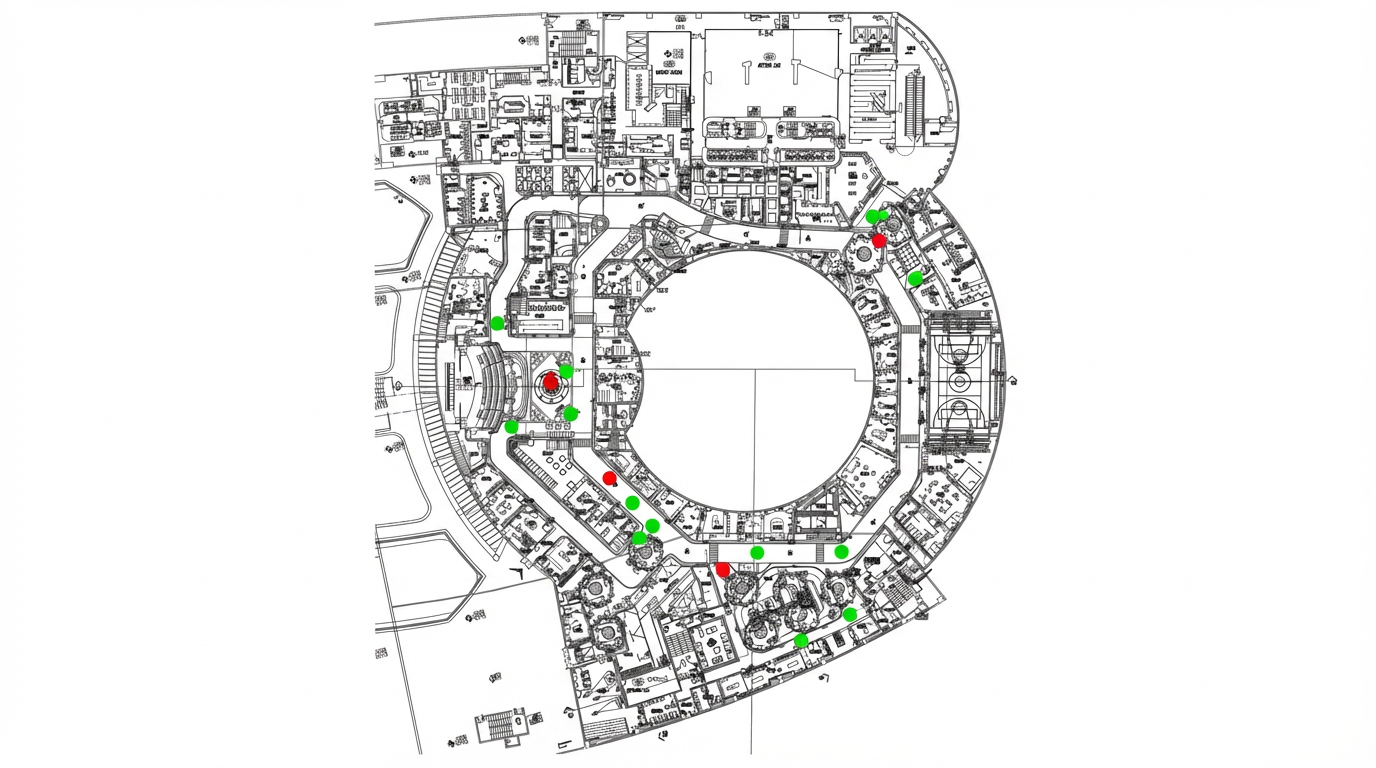
Figure II- Source and receiver points
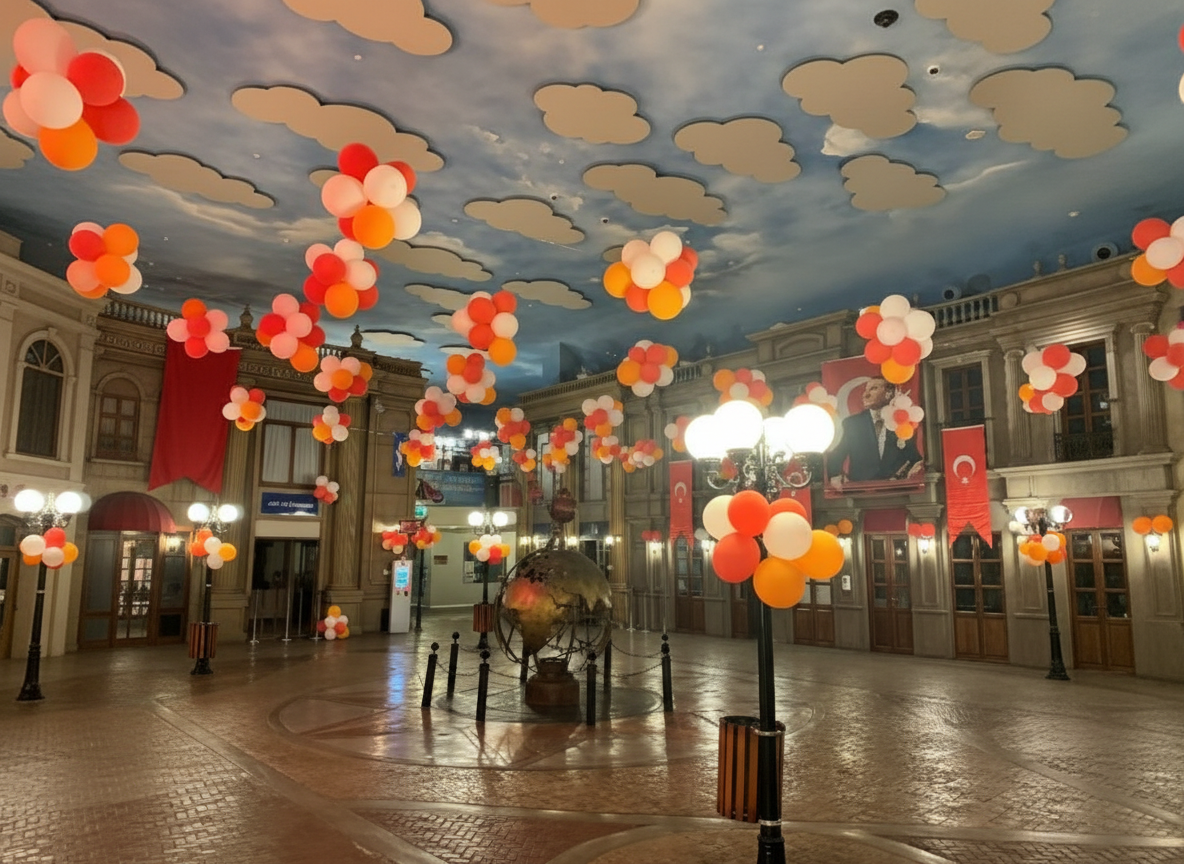
Figure III- After assembly of Flat Cloud products
Acoustic Strategy
Initial reverberation time measurements followed EN ISO 3382-2 standards. The results showed values exceeding 2 seconds within speech-related frequency ranges (250–1000 Hz). These results clearly indicated inadequate acoustic conditions for a large-scale children’s entertainment space.
Due to these findings, the team selected Flat Cloud acoustic panels for their high sound absorption performance and architectural flexibility. The ceiling-only application aligned well with the project’s design constraints.
To further enhance performance, the team combined the system with Feltfill. This approach achieved Class A sound absorption in accordance with TS EN ISO 11654. As a result, the project gained an effective and adaptable acoustic strategy that fit within the existing architectural framework.
Implementation and Optimization
Interior design requirements and fire safety regulations limited acoustic treatments to ceiling surfaces. To address this, Feltouch increased overall sound absorption by combining Flat Cloud panels with Feltfill. The team applied Feltfill in both visible and concealed areas.
Feltfill offers several advantages. It is dust-free, certified for low VOC emissions, and fire resistant. In addition, it does not release harmful substances that could affect human health.
After the initial installation, follow-up measurements confirmed improved acoustic performance. To optimize results further, the team added additional Feltfill layers and adjusted suspension heights. These changes aligned with sprinkler system requirements while increasing acoustic efficiency.
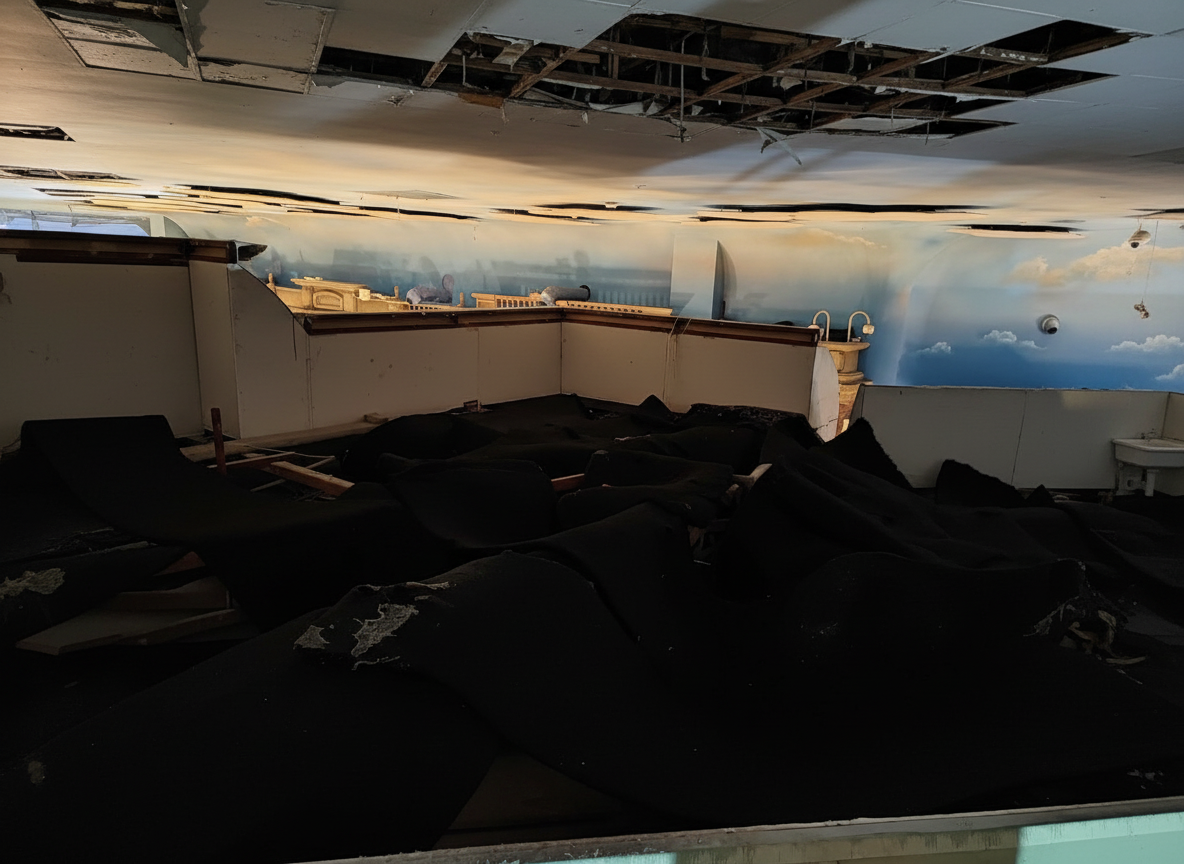
Figure IV- Laying Feltfill on buildings
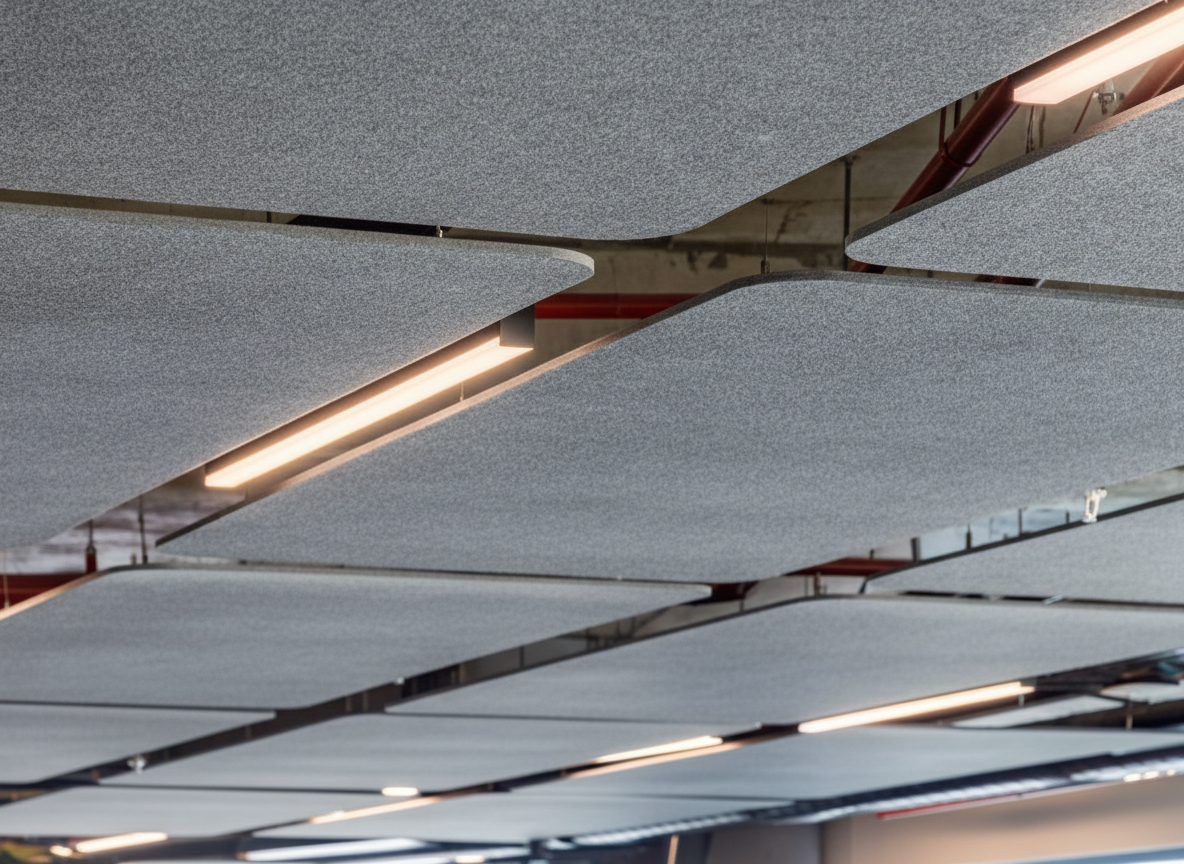
Figure V- Flat Cloud
Results and Key Learnings
Final measurements reduced reverberation times to below 1.5 seconds in most areas. The improved acoustic conditions significantly increased speech intelligibility and overall acoustic comfort. As a result, the space now provides a more balanced and user-friendly sound environment.
This project demonstrates the importance of integrating acoustic design early in the architectural process. In large-volume spaces, layered and iterative acoustic strategies deliver more effective results. Moreover, early coordination with technical systems improves both performance and design flexibility.
Within the scope of this study, our paper titled “Integration of Acoustic Comfort into Interior Design: A Case Study on KidZania Children’s World” will be published at the 1st International Interior Architecture Congress and Exhibition, to be held in Antalya between February 12–15.