
The Role of Acoustic Comfort in Office Design
Acoustic comfort plays a crucial role in creating productive and healthy office environments. In modern workplaces, sound control directly affects concentration, communication, and overall well-being.
As open-plan offices become more common, managing noise levels has become a key design challenge. Without proper acoustic planning, excessive sound can reduce focus and negatively impact daily work performance.
By integrating acoustic strategies early in the design process, offices can support both focused work and collaborative activities more effectively.

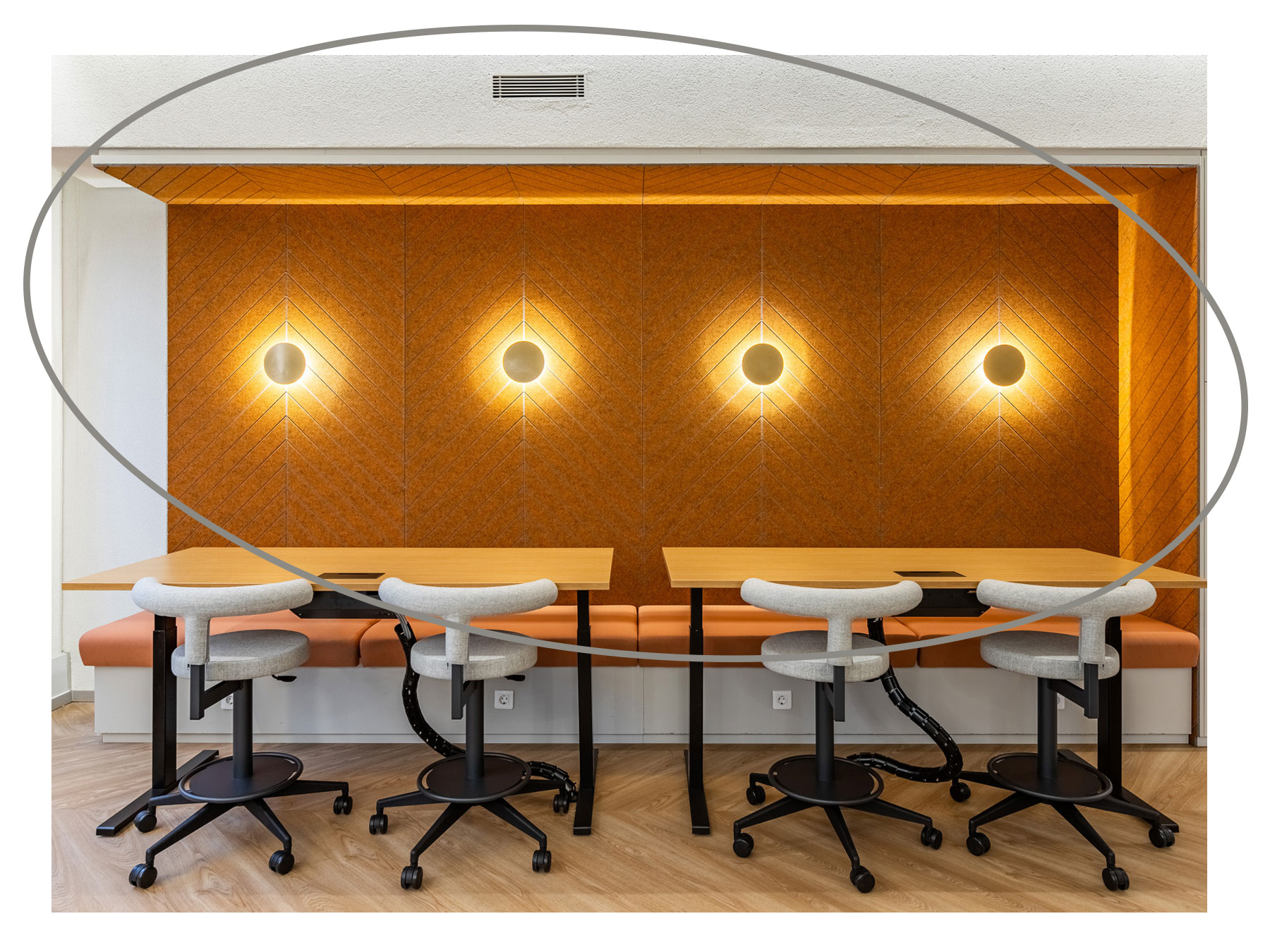
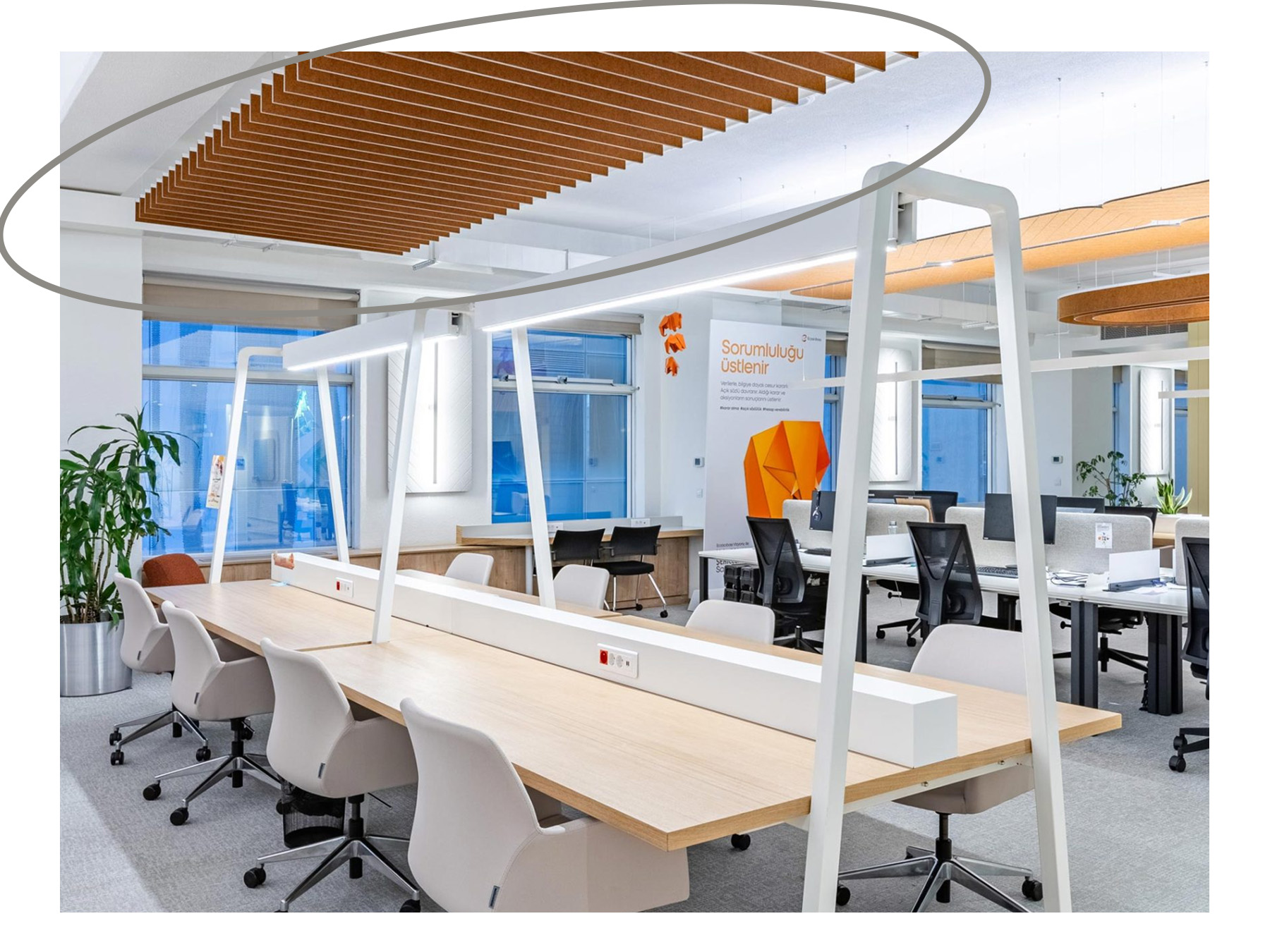
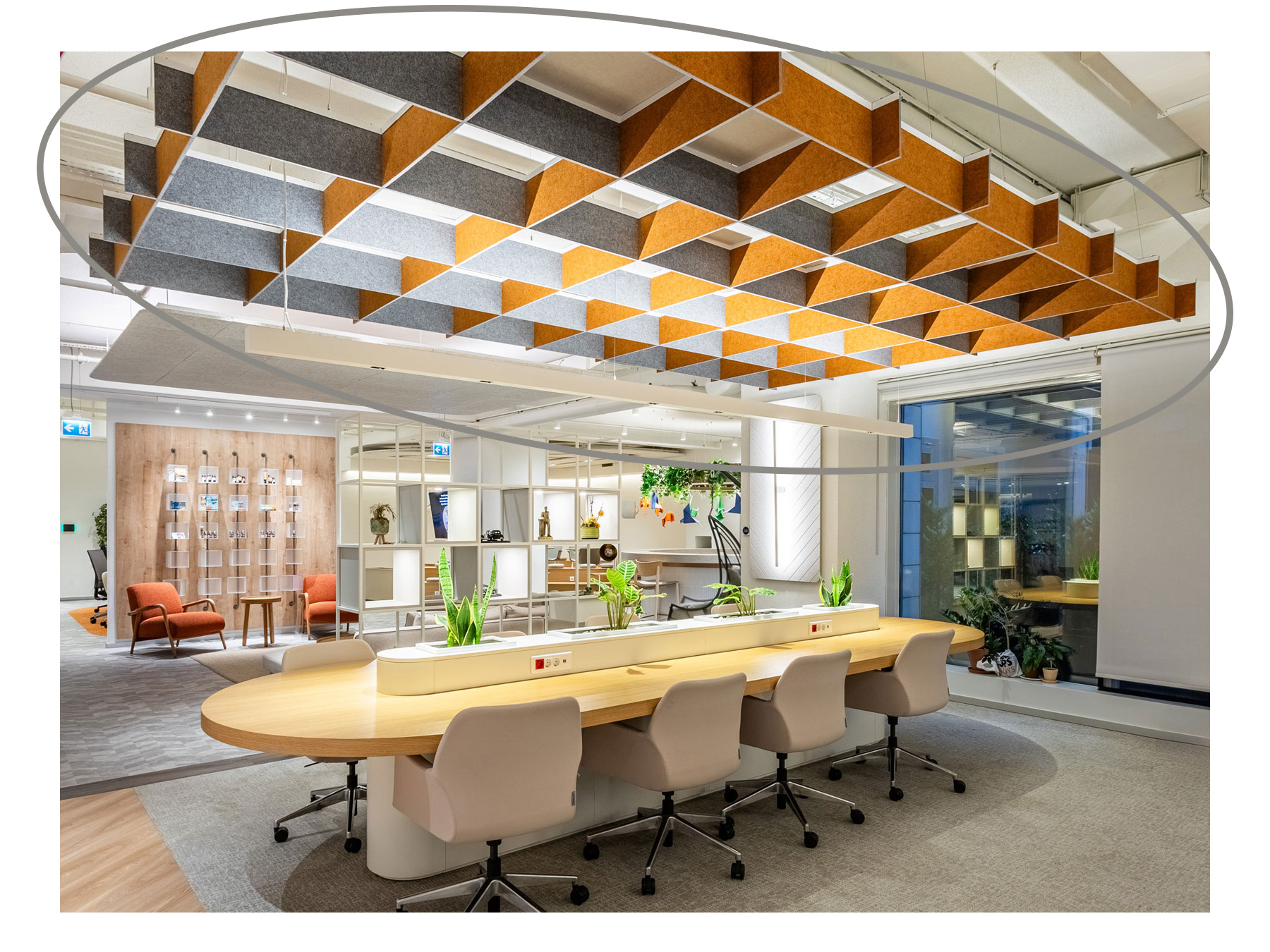
Eczacıbaşı Pharmaceuticals project, Grid Ceiling, Flat Cloud, Chevrone, and Air-Felt Baffle systems were applied to improve sound absorption while maintaining a clean and continuous ceiling design in the office areas.
Open-plan offices often face challenges related to sound reflections and background noise. In these environments, conversations, phone calls, and daily movement spread easily throughout the space.
As a result, several common acoustic issues appear:
-
Elevated background noise levels that make concentration more difficult
-
Long reverberation times that cause sound to remain in the space
-
Reduced speech intelligibility in shared and collaborative areas
-
Increased cognitive load, which can lead to mental fatigue over time
Because of these factors, open-plan offices require well-planned acoustic ceiling and wall solutions to maintain comfort and focus.

Physical Effects of Poor Acoustic Comfort
Poor acoustic comfort can directly affect physical well-being in office environments. Over time, constant exposure to noise may cause headaches, increased stress levels, and overall fatigue.
In addition, inadequate acoustic conditions can result in:
-
Difficulty maintaining focus during work
-
Increased physical tension
-
Reduced energy levels throughout the day
Psychological Impact of Noise in Workspaces
Beyond physical effects, noise also affects psychological well-being in the workplace. In noisy environments, constant background sound can lower motivation and increase irritability. Over time, employees may begin to feel mentally tired or overwhelmed.
In addition, poor acoustic conditions often disrupt communication and teamwork. When speech clarity is reduced, misunderstandings occur more often, which can weaken collaboration and lower overall workplace satisfaction.
How Feltouch Helps Improve Acoustic Comfort in Open-Plan Offices
Feltouch offers a wide range of acoustic solutions designed specifically for open-plan offices. By combining ceiling-based systems, wall panels, and integrated lighting solutions, Feltouch helps reduce reverberation while maintaining a visually open space.
These systems improve speech intelligibility, support focused work, and create a calmer acoustic atmosphere. At the same time, the use of recycled PET felt contributes to sustainable interior design without compromising performance.
Thanks to their modular and lightweight structure, Feltouch acoustic solutions also allow for easy installation and flexible design adaptation.
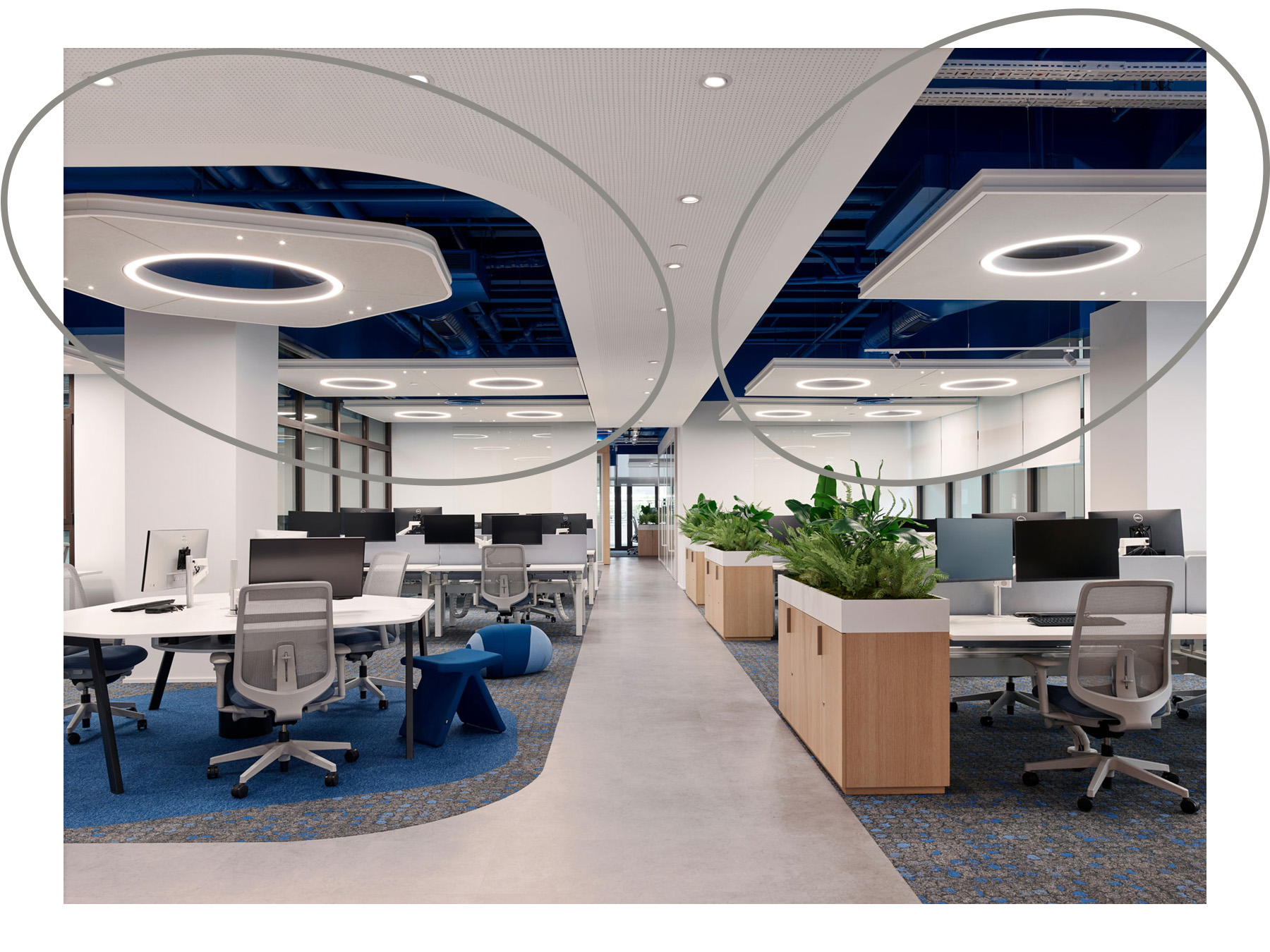
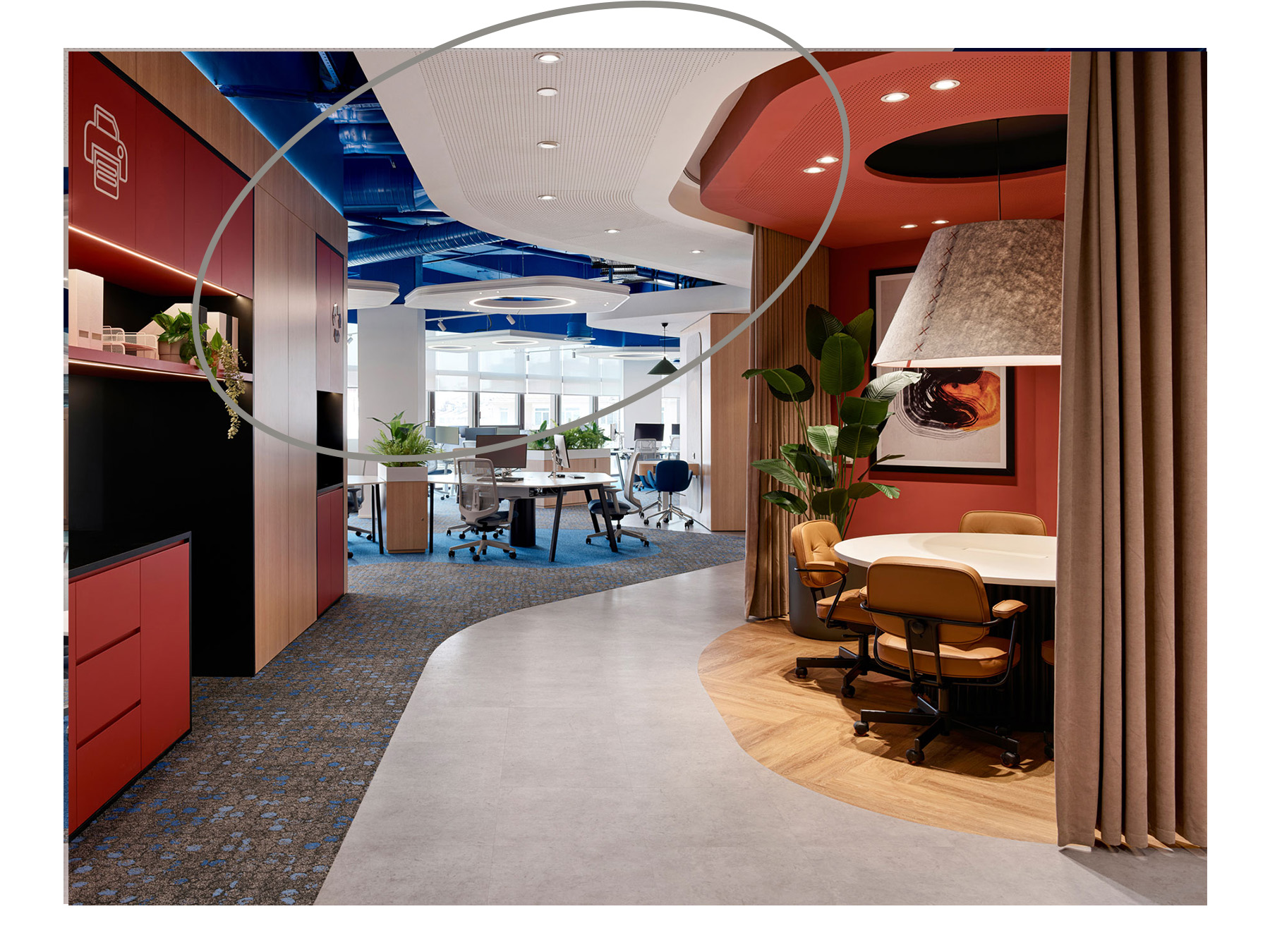

Amadeus Project, Plate acoustic ceiling panels were applied to improve sound absorption while maintaining a clean and continuous ceiling design in the open-plan office areas.
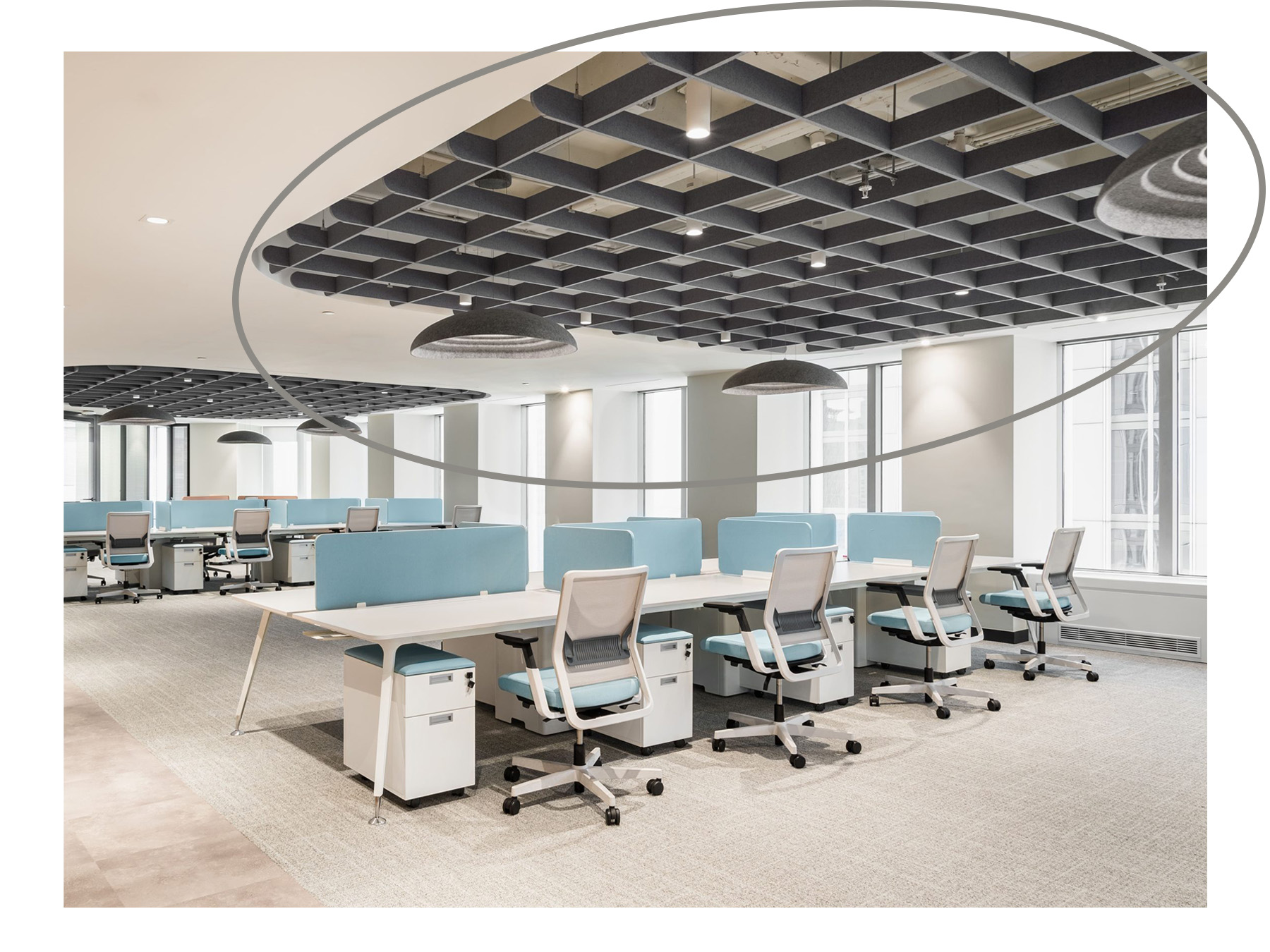
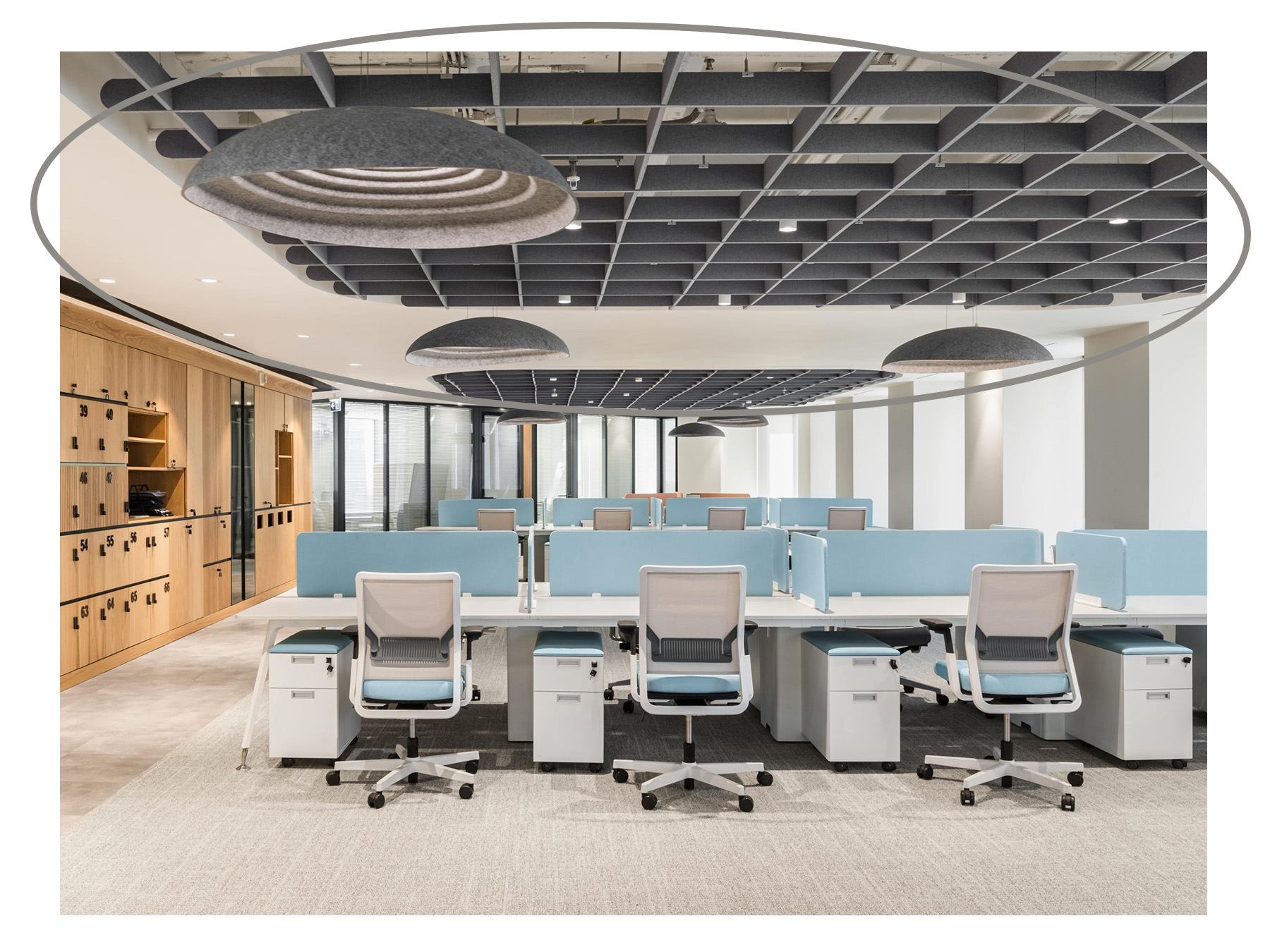
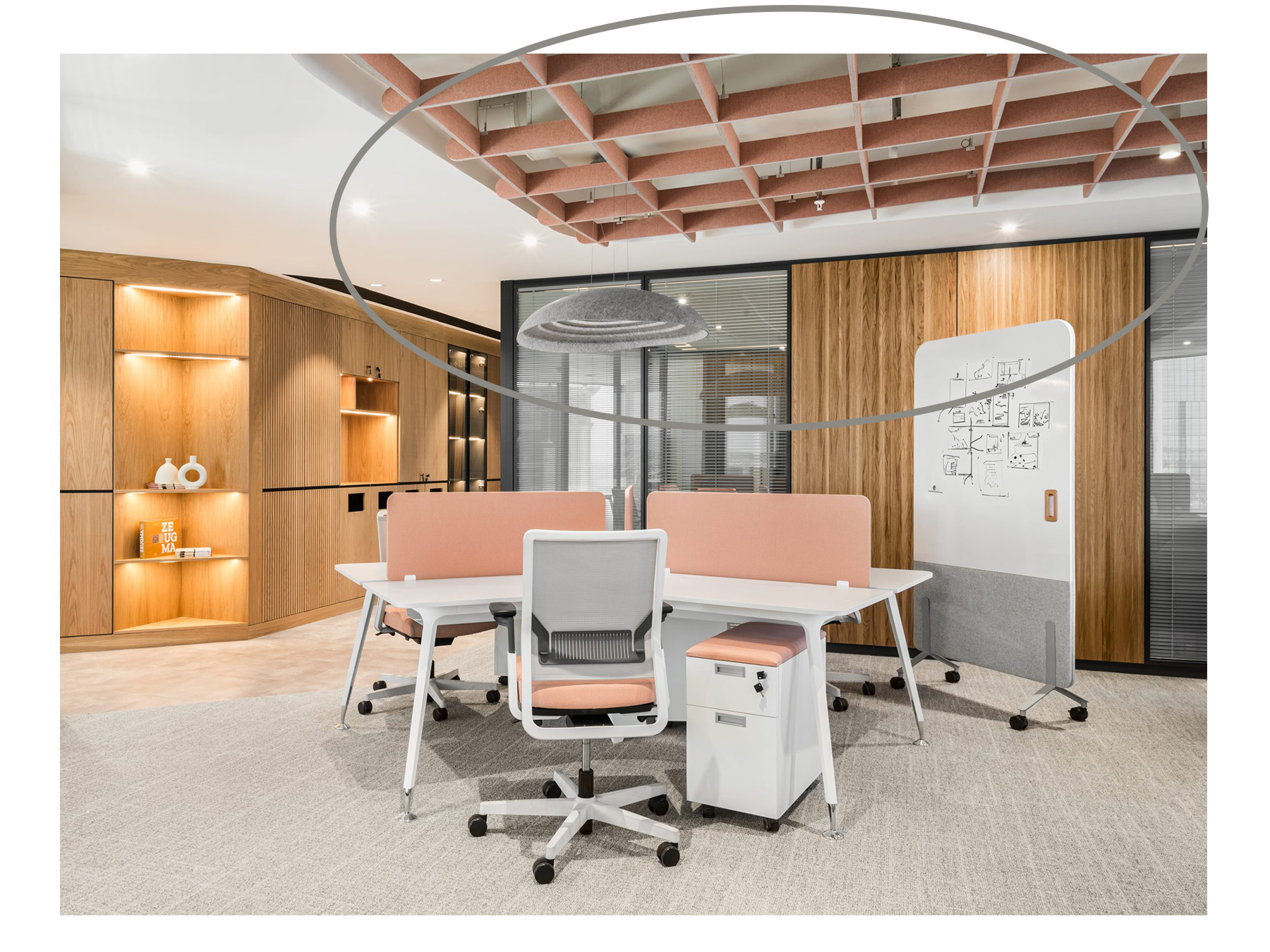
In the Trakya Yazılım project, Ripple and Grid acoustic ceiling systems were applied to improve sound absorption while maintaining a structured and visually consistent open-plan office layout.
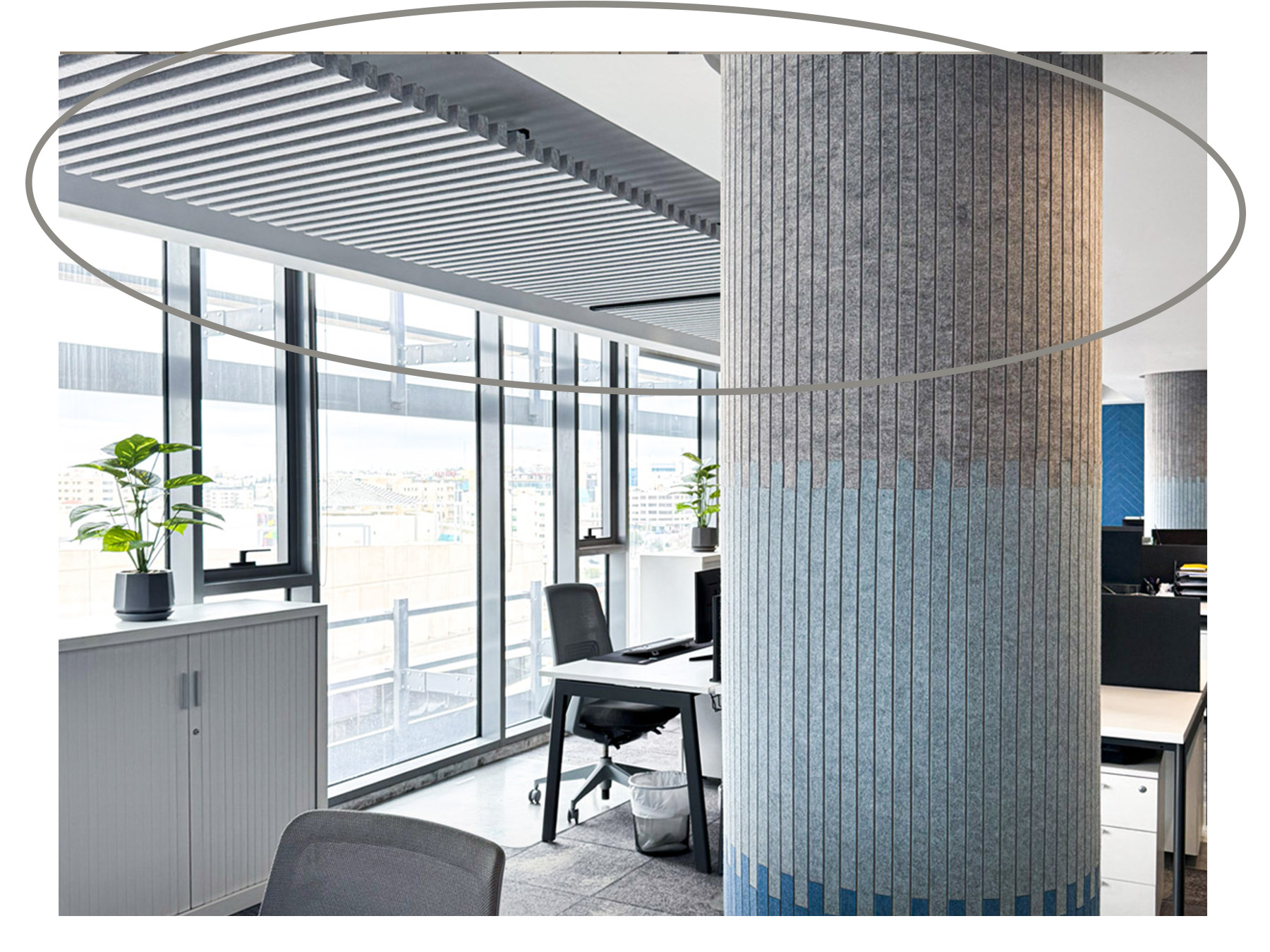
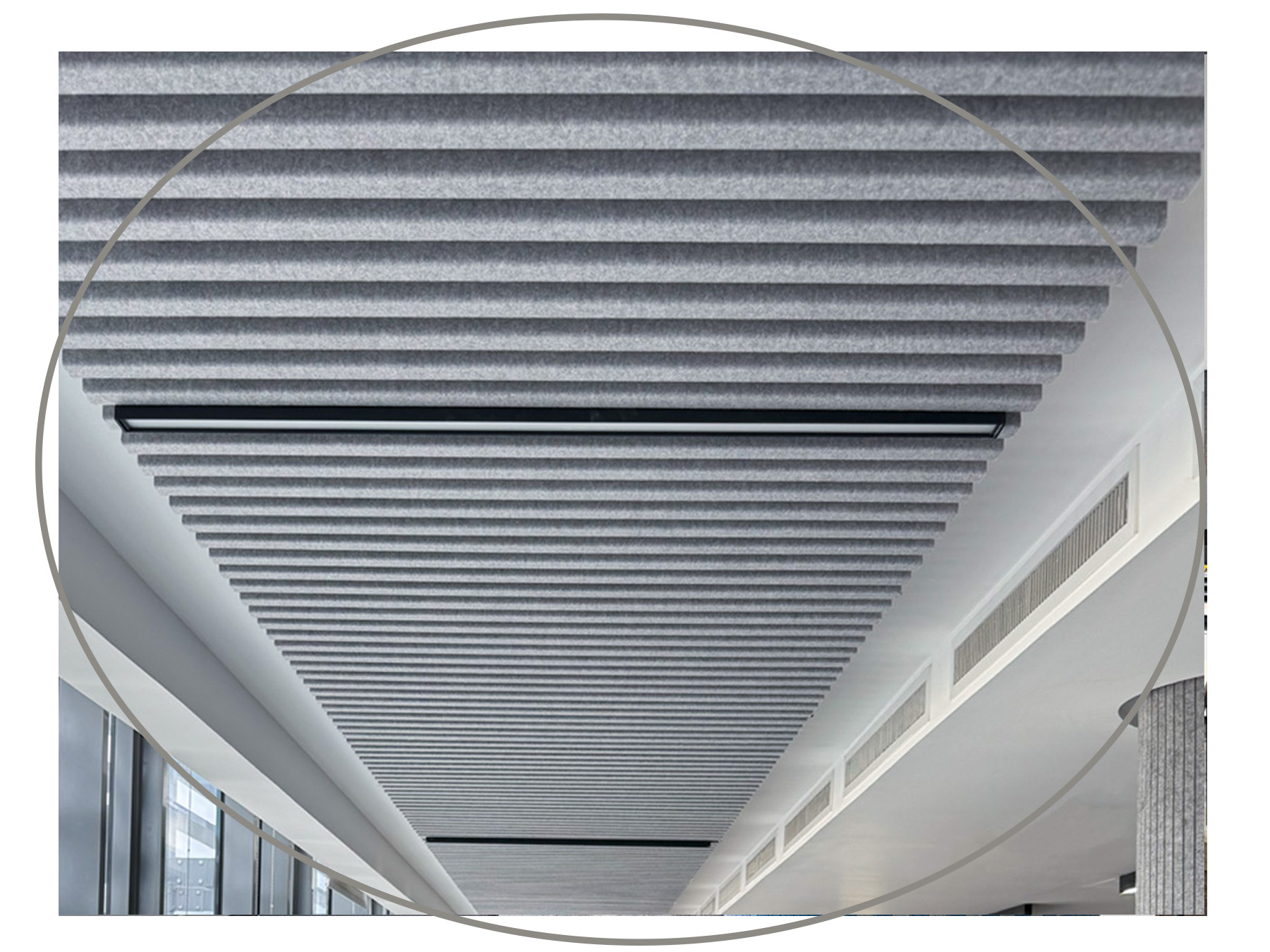
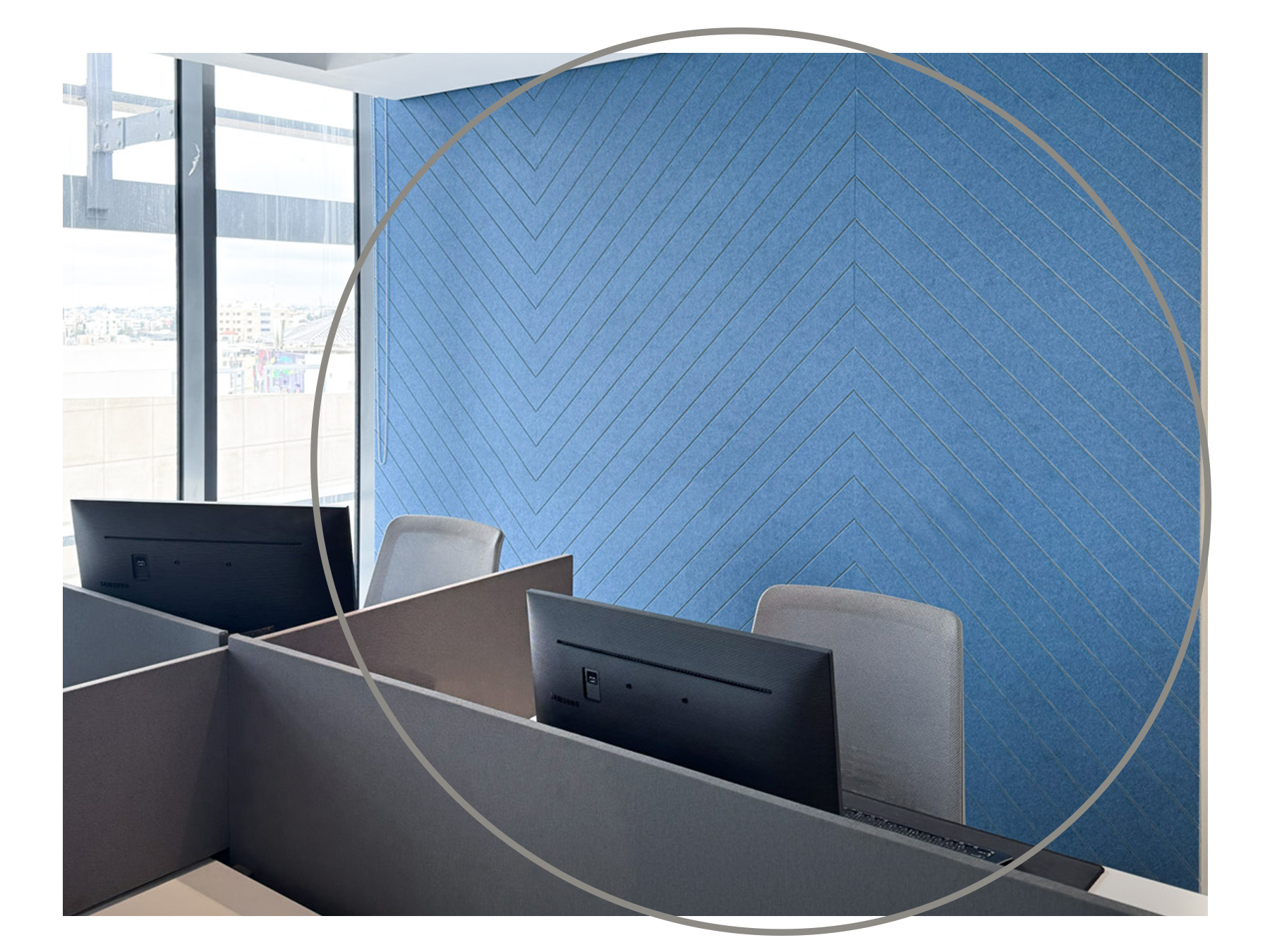
Amin Kawar & Sons Co. project, Cracker, Tiles Line and Tiles Chevrone applications were used to enhance acoustic comfort while adding texture, rhythm and visual depth to both ceiling and wall surfaces.
A Holistic Approach to Acoustic Office Design
Achieving acoustic comfort requires a holistic approach to office design. Rather than relying on a single solution, combining different acoustic elements leads to more balanced and effective results.
When acoustic ceiling systems, wall panels, and spatial layouts are planned together, offices gain better sound control, increased comfort, and a more positive user experience. As a result, well-designed acoustics help create healthier, more comfortable, and more efficient workplaces.