
Reverberation Time: A Useful but Limited Metric
In room acoustics, reverberation time (RT) is one of the most commonly used parameters to describe how “echoey” a space is. However, reducing acoustic comfort to this single metric can be misleading. In many projects, even when RT is brought within target ranges, users may still feel uncomfortable. This is because acoustics is not only about how quickly sound decays, but also about how it propagates and is perceived within a space.
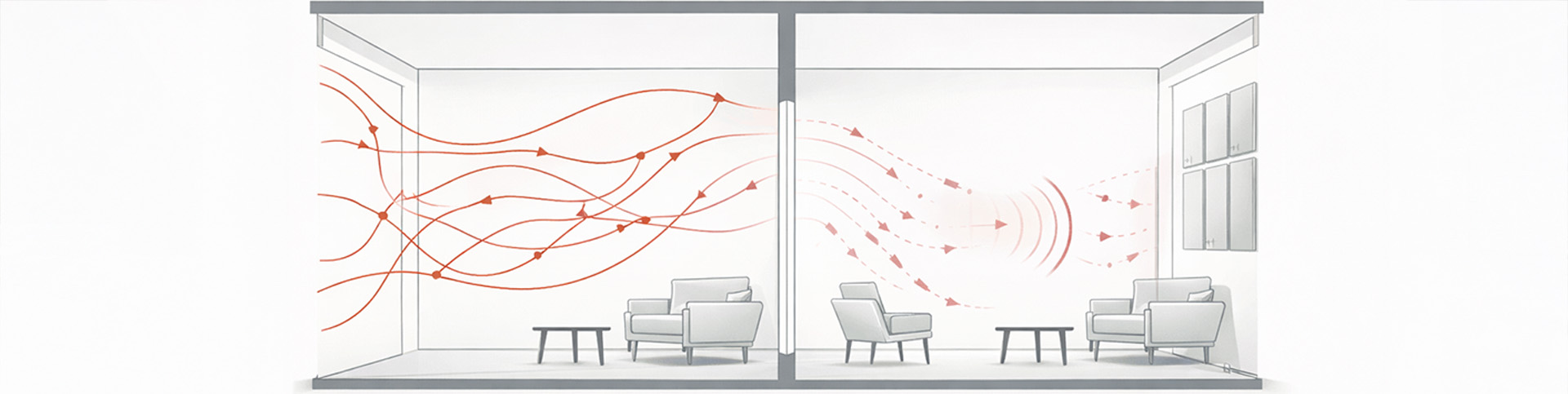
Long reverberation
Controlled acoustic
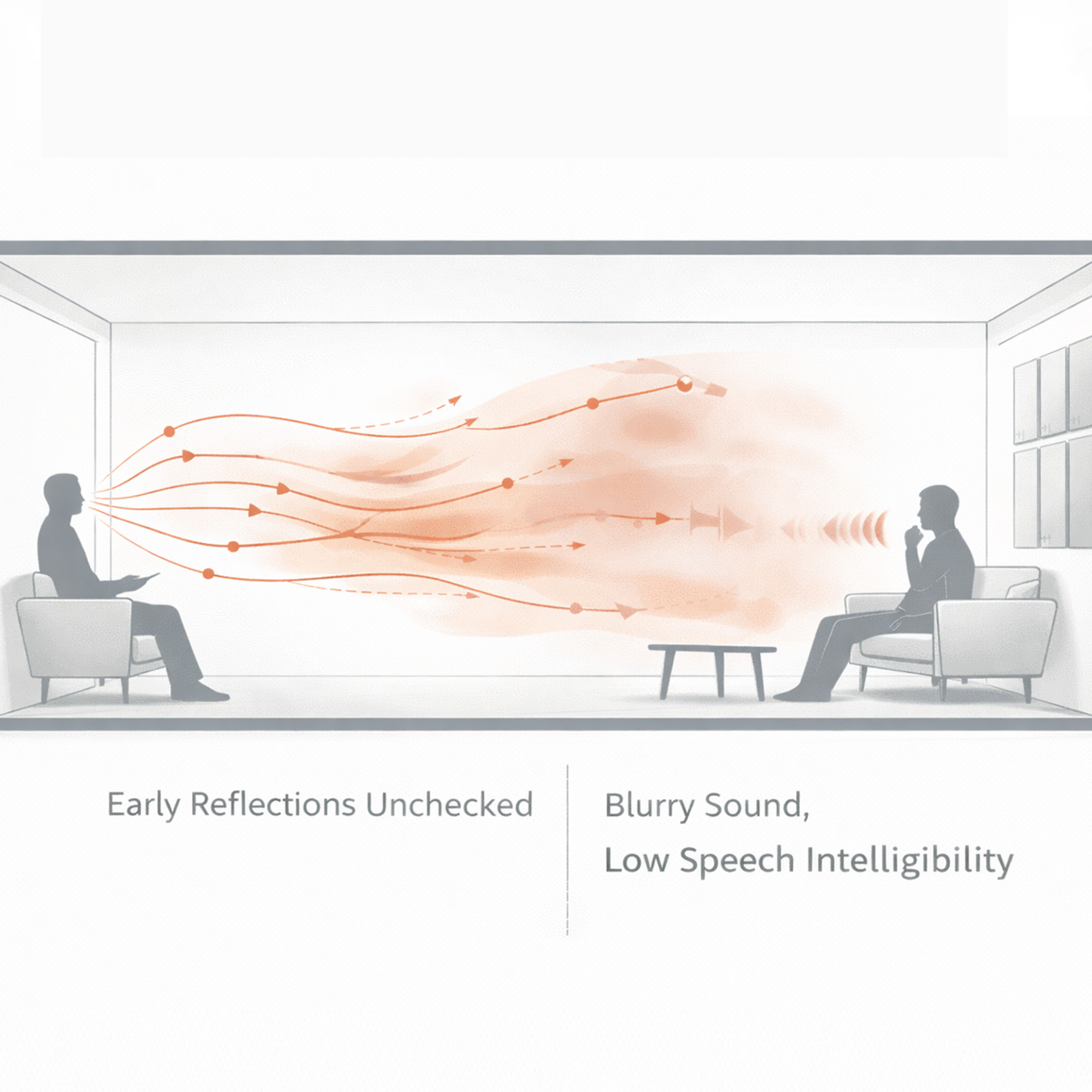
Early Reflections and Speech Intelligibility
Even with low RT values, if early reflections are not properly controlled, sound can become blurred and speech intelligibility decreases. When first reflection points are neglected, spaces are often perceived as tiring and acoustically unstable.
Acoustic clarity depends not only on absorption, but also on managing how sound energy reaches the listener in the first milliseconds.
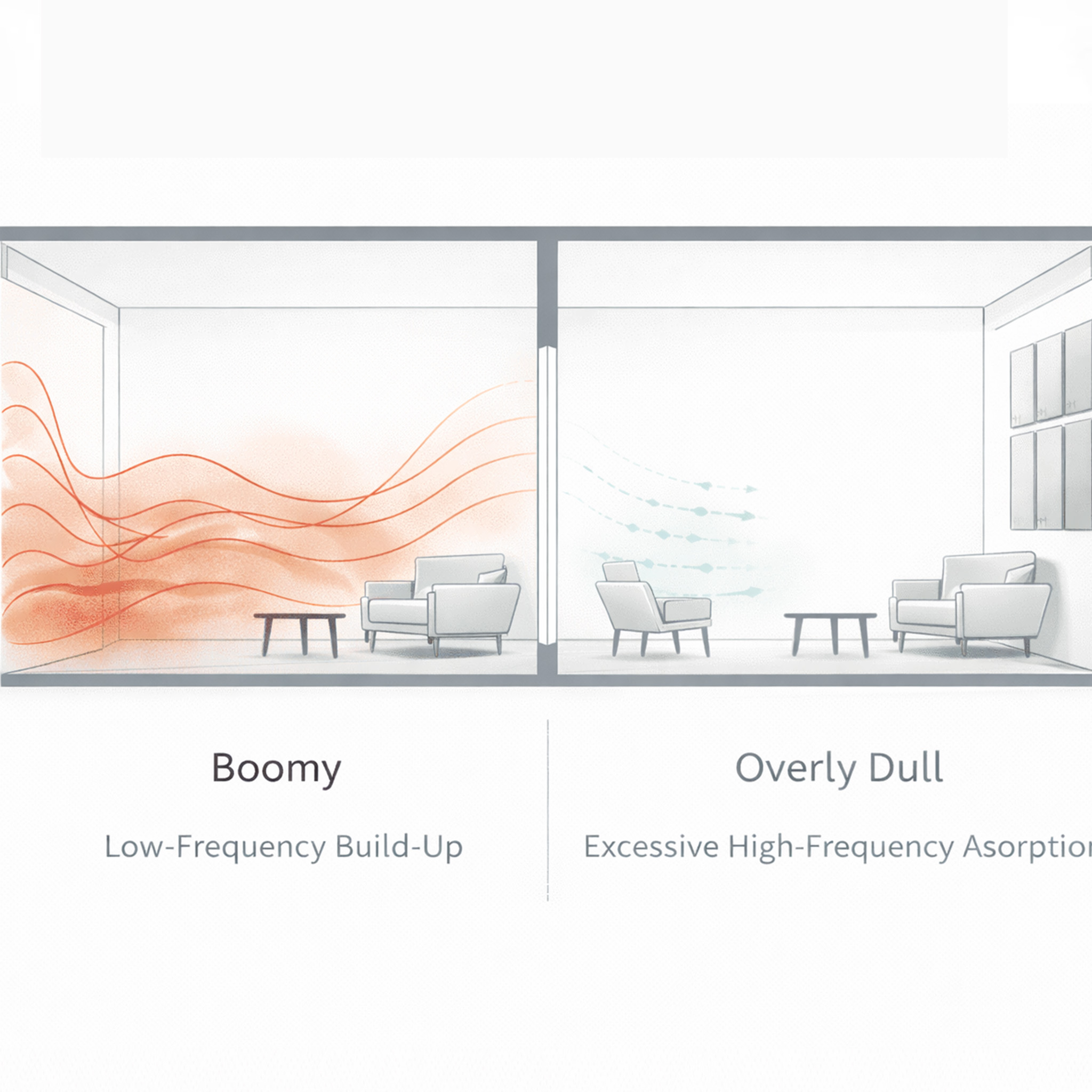
Frequency Imbalance: Boomy or Overly Dull Spaces
Imbalances across frequencies can create additional issues. While mid frequencies may be well controlled, low-frequency build-up or excessive high-frequency absorption can make a space feel either “boomy” or “overly dull.”
A balanced acoustic environment requires attention to the full frequency spectrum, not just average RT values.
Psychological Impact of Noise in Workspaces
Beyond physical effects, noise also affects psychological well-being in the workplace. In noisy environments, constant background sound can lower motivation and increase irritability. Over time, employees may begin to feel mentally tired or overwhelmed.
In addition, poor acoustic conditions often disrupt communication and teamwork. When speech clarity is reduced, misunderstandings occur more often, which can weaken collaboration and lower overall workplace satisfaction.
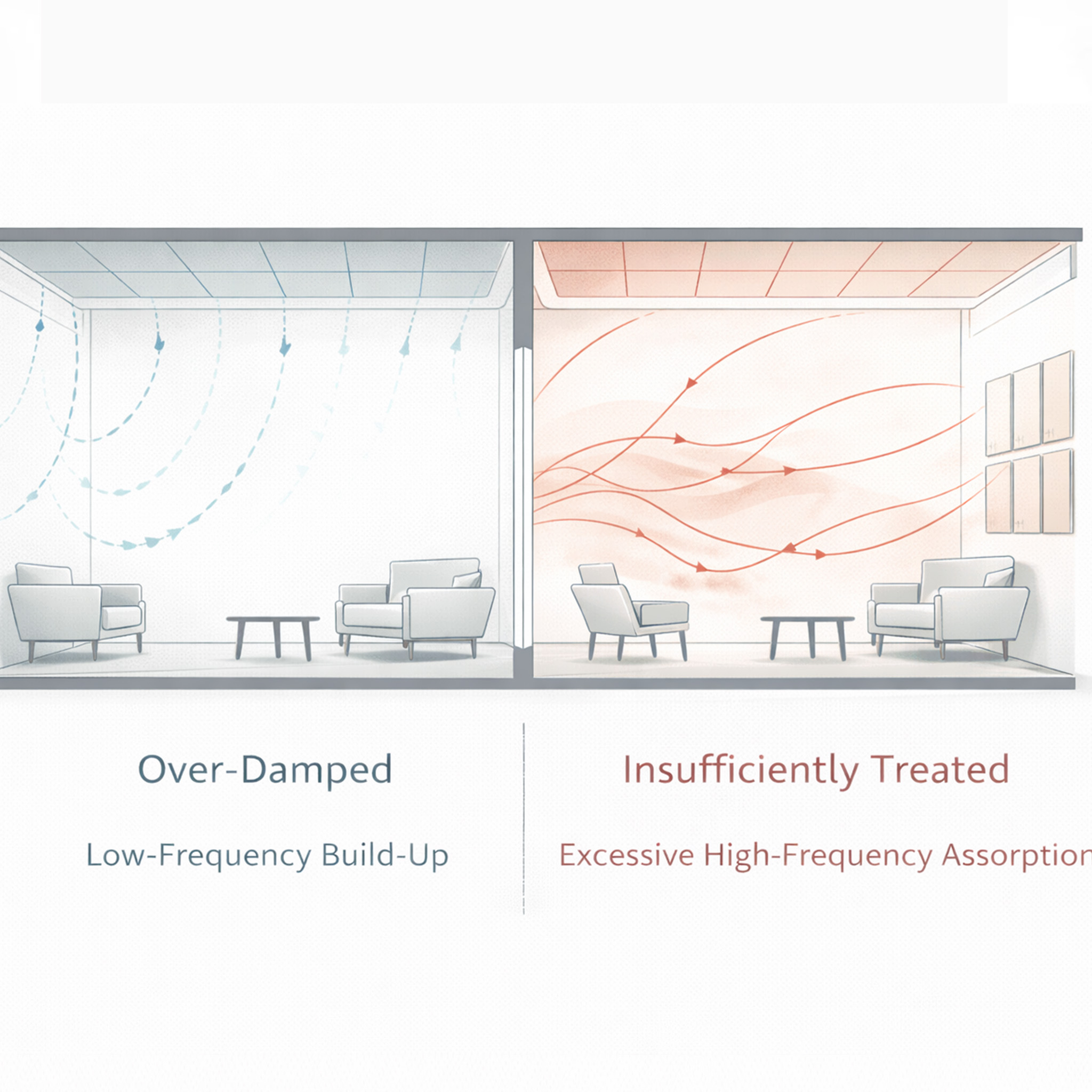
Uneven Distribution of Absorptive Materials
Uneven placement of absorptive materials can lead to inconsistent acoustic conditions across a space. Solutions focused only on ceilings, for example, may leave some areas over-damped while others remain insufficiently treated.
True acoustic performance depends on spatial balance, not isolated interventions.
Background Noise and the Lombard Effect
Background noise is another critical factor. Even when RT is within acceptable limits, high noise levels caused by mechanical systems or user activity—can reduce speech intelligibility.
As people try to compensate by speaking louder, the overall noise level increases further, creating a feedback loop of discomfort.
A Holistic Approach to Acoustic Comfort
In conclusion, while reverberation time is a key component of acoustic design, it is not sufficient on its own. Achieving true acoustic comfort requires a holistic approach that considers early reflections, frequency balance, spatial distribution, and noise control together.
Acoustic design should not aim merely to meet a numerical target, but to create environments that truly support human perception and well-being.